
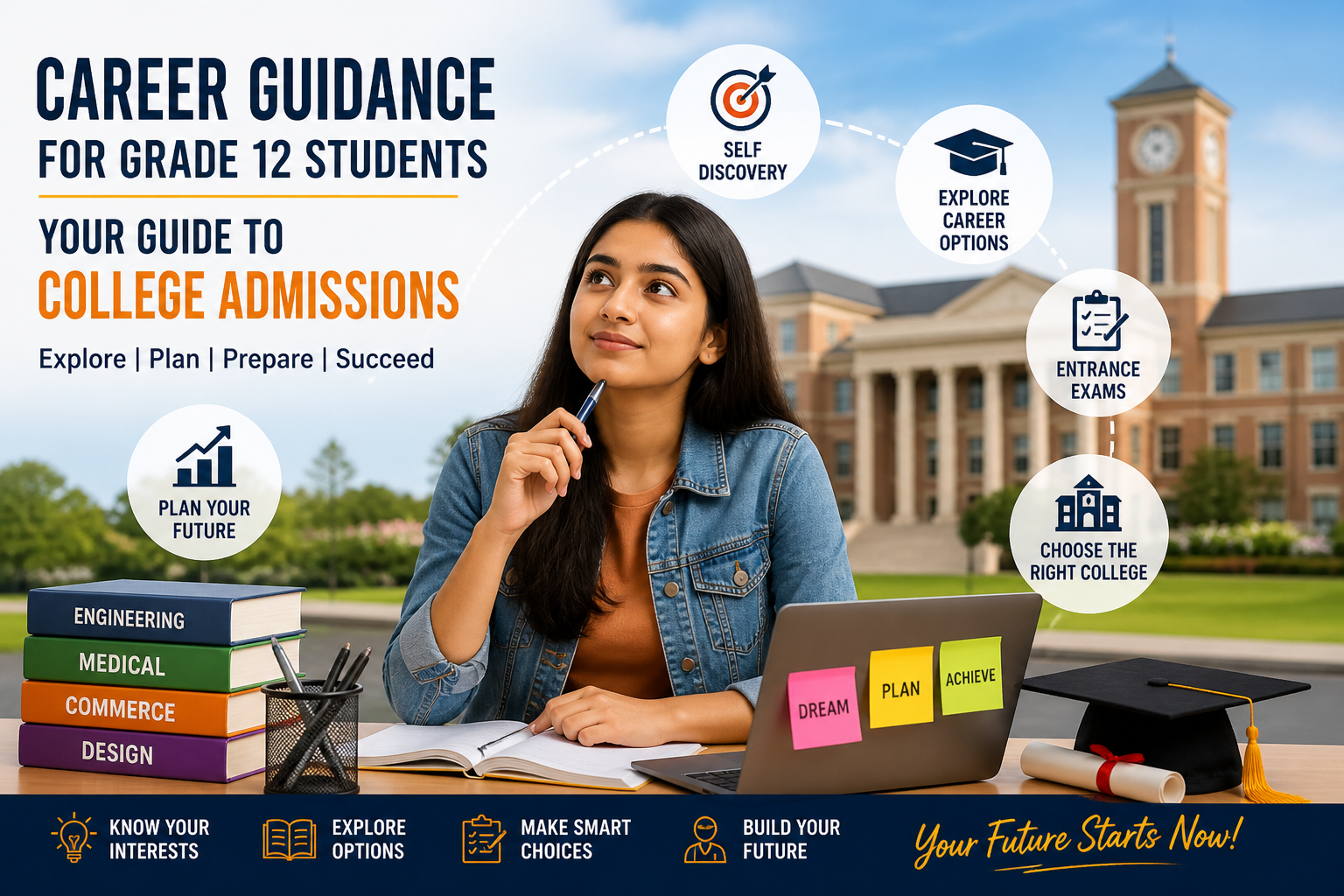
Choosing a career after Grade 12 is one of the most important decisions in a student’s life. At this stage, students often feel confused due to multiple options, advice from different people, and uncertainty about the future. With the right approach, you can make a clear and confident decision.
This guide will help you understand how to choose the right career path and plan your college admissions effectively.
1. Understand Yourself First
Before selecting any course or college, it is important to understand your interests, strengths, and abilities.
Ask yourself the following questions:
- Which subjects do I enjoy studying the most?
- What are my strengths and skills?
- What type of work do I enjoy doing?
- Do I prefer creative, technical, or people-oriented work?
Examples:
- Students interested in Mathematics and problem-solving may explore Engineering, Data Science, or Economics.
- Students interested in Biology may consider Medical, Pharmacy, or Life Sciences.
- Students interested in business and finance may explore Commerce, CA, or Management.
- Creative students may explore Design, Media, Writing, or Performing Arts.
Your career should be based on your interest and ability, not on peer pressure or trends.
2. Explore Career Options
Students today have a wide range of career options beyond traditional fields. It is important to explore all possibilities before making a decision.
A. Traditional Career Options
- Engineering (B.Tech, B.E.)
- Medical (MBBS, BDS, Nursing)
- Commerce (B.Com, CA, CS)
- Management (BBA, Hotel Management)
- Arts and Humanities (BA, Psychology, Sociology, Journalism)
B. Emerging and Modern Career Options
- Artificial Intelligence and Data Science
- Digital Marketing
- Cyber Security
- Game Development
- Entrepreneurship and Startups
C. Creative and Skill-Based Careers
- Writing and Content Creation
- Journalism and Blogging
- Graphic Designing
- Photography and Videography
- Film Making and Editing
D. Performing Arts and Sports Careers
- Music (Singing, Instrument Playing)
- Dance and Choreography
- Acting and Drama
- Sports (Professional Athlete, Coaching, Sports Management)
E. Social and Service-Oriented Careers
- Social Work
- Teaching and Education
- Public Service and Civil Services
- NGO and Community Development Work
F. Independent and Freelance Careers
- Freelancing (Content Writing, Designing, Coding)
- Influencer and Social Media Careers
- Online Tutoring
- Small Business and Self-Employment
Before choosing any field, understand:
- Course duration and structure
- Required skills and qualifications
- Career growth and future opportunities
3. Choose the Right College
Selecting the right college plays a major role in shaping your future.
Consider the following factors:
- College reputation and accreditation
- Quality of faculty and teaching
- Placement records and internship opportunities
- Infrastructure and campus facilities
- Location and affordability
Do not choose a college only based on its name. Evaluate the overall value it offers.
4. Understand Entrance Exams
Many colleges require entrance exams for admission. It is important to be aware of them and prepare accordingly.
Some common entrance exams include:
- Engineering: JEE Main, JEE Advanced
- Medical: NEET
- Law: CLAT
- Central Universities: CUET
- Management: IPMAT and other university-level exams
Start preparation early and maintain consistency in your study plan.
5. Plan Your Admission Timeline
Proper planning helps you stay organized and reduces stress.
Suggested timeline:
- April to June: Explore courses and shortlist colleges
- June to September: Prepare for entrance exams
- October to January: Fill application forms
- After results: Compare options and confirm admission
Keep track of important dates and deadlines to avoid missing opportunities.
6. Seek Guidance
You do not have to make decisions alone. Guidance from experienced people can help you make better choices.
You can:
- Talk to teachers and school counselors
- Discuss options with parents
- Take professional career counseling if required
- Attend career seminars and webinars
Guidance helps in gaining clarity and avoiding confusion.
7. Avoid Common Mistakes
Be careful of common mistakes made by students:
- Choosing a career due to peer pressure
- Ignoring personal interests and strengths
- Not researching enough about courses and colleges
- Missing application deadlines
- Following trends without understanding the field
Make decisions based on your long-term goals and personal interests.
8. Final Thoughts
Your career journey begins after Grade 12, but it is not limited to a single decision. There will be many opportunities to learn, grow, and change directions if needed.
Choose wisely, stay focused, and work hard towards your goals.
The best career is one that matches your interests, skills, and passion.
All the very best !